Ray Nichels … The complete story

Ray R. Nichels
Nichels Engineering

_________________________________________________________

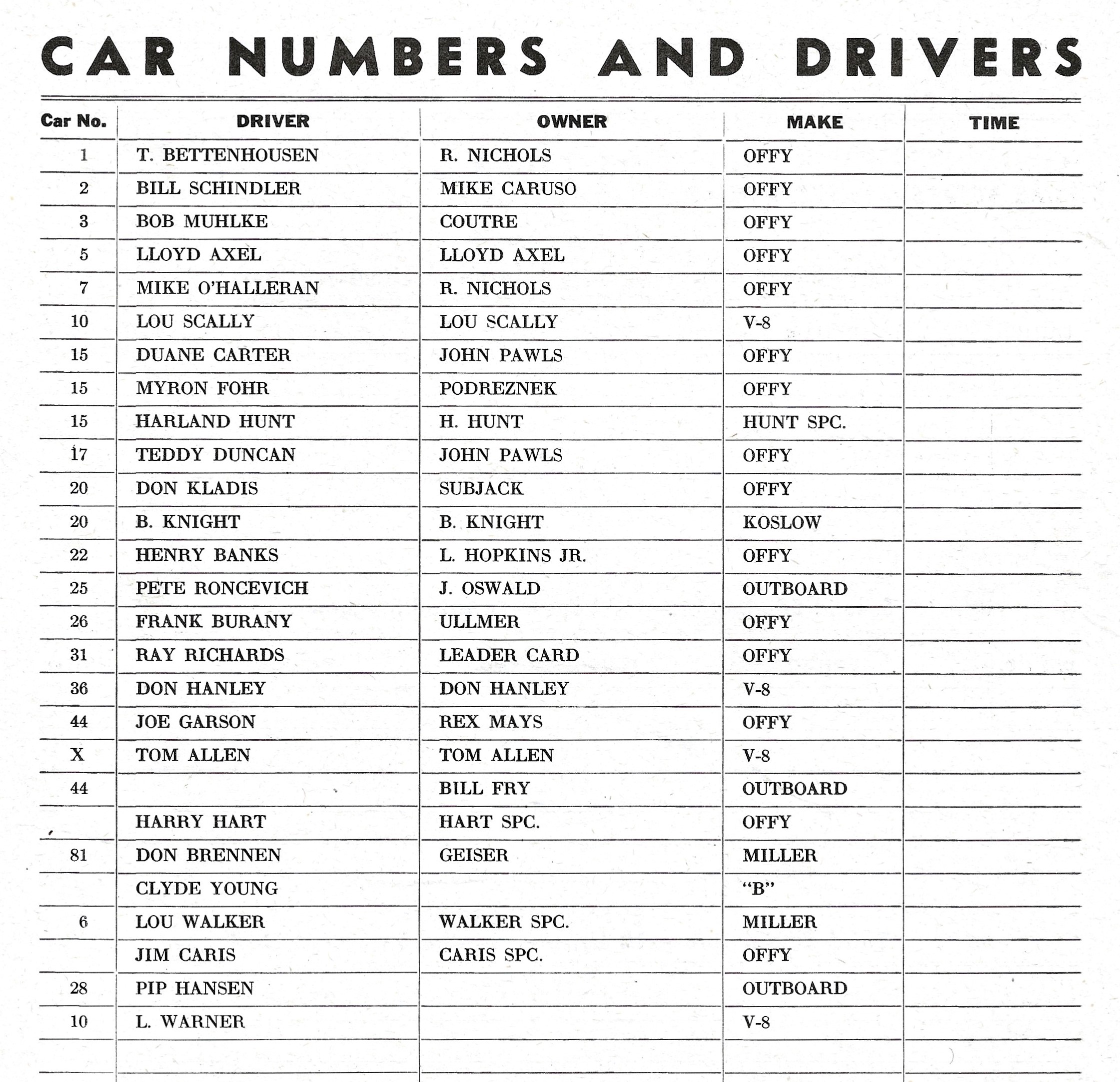
In 1938, at the age of 15, Ray Nichels, went on the road as a midget car crew chief, racing at tracks across America. From 1938-1948, the drivers of the Ray Nichels prepared midgets (campaigned by his father Rudy Nichels) were Ted Duncan, Tony Bettenhausen, Johnnie Parsons, Paul Russo, Mike O’Halloran, and Ray Richards (All members of the Midget Racing Hall of Fame.)

Following his time midget racing, Nichels moved on to Indy cars and eventually participated in 12 Indianapolis 500 races, as a chief mechanic and crew chief. In those twelve 500’s, Ray Nichels won one Pole (1957 w/Pat O’Connor), garnered two top-five finishes (a 3rd and a 5th w/Paul Goldsmith), and five top-ten finishes. Most notable of his top-ten finishes was the 9th place showing in the 1950 Indianapolis 500 of the Russo-Nichels Special. Paul Russo and Ray Nichels constructed this car in the basement of Russo’s Hammond, Indiana home during the winter of 1949-1950. Qualifying in the 7th row, the Russo-Nichels Special captured the imagination of the American racing public by running with the leaders for much of the day, before the rain-shortened race ended at 345 miles. The Russo-Nichels Special soon became affectionately known as “Basement Bessie” as it was campaigned on the AAA Championship Trail during the 1950 season. In December, Nichels with Johnnie Parsons behind the wheel, won the first ever Indy car race at the newly built Darlington Raceway. On the season, Ray Nichels and Paul Russo and their hand-built “basement” creation missed the chance to win the National Championship only after a season-ending injury to Russo in the November AAA Indy car race in Phoenix.

Nichels then toiled as chief mechanic for Johnnie Parsons’ entries in the 1953 and 1954 Indy 500 races. In June of 1954, Ray Nichels joined the Firestone Tire and Rubber Company as its chief mechanic for all race tire testing. In their first test together, he and driver Sam Hanks teamed up to set a new world’s closed-course speed record of 182.554 mph at Chrysler Corporation’s newly built Chelsea, Michigan proving grounds in a Nichels prepared Chrysler Hemi-powered Kurtis-Kraft roadster. It would be the first of many world speed records that Nichels and his cars would set over the next 20 years.

In 1957, Ray Nichels and Indiana-based Nichels Engineering won the pole (w/Banjo Matthews) and won the race (w/Cotton Owens) at the NASCAR Grand National Beach Race at Daytona. Two months later, Nichels traveled to Monza, Italy on behalf of Firestone, and set a series of world speed records on the world’s highest-banked oval with driver Pat O’Connor behind the wheel of the Chrysler Hemi-powered Kurtis-Kraft roadster. Nichels and O’Connor then returned to the United States where they won the Pole position for the world’s most important race, the Indianapolis 500. It is believed Ray Nichels remains to be the only mechanic to ever win the pole at both Daytona and Indianapolis in the same year.

With his 1957 Daytona win, Nichels expanded his stock car racing business becoming the “house” racecar builder for Pontiac from 1956-1963. Working directly for Pontiac Gen. Mgr. Semon “Bunkie” Knudsen, Nichels managed Pontiac’s involvement in stock car racing from his operations in Highland, Indiana. By 1961, under Nichels’ guidance, Pontiac dominated American stock car racing. Nichels Engineering driver, Paul Goldsmith captured the USAC National Championship with 10 wins, 7 poles and 16 top-five finishes in 19 races. Overall Pontiac performance in USAC was 14 wins, 10 poles and 38 top-five finishes in 22 races. In NASCAR, overall Pontiac performance was 30 wins in 52 races. In 1962, Pontiac’s dominance under Nichels became even further evident as Nichels and Goldsmith won their 2nd consecutive USAC National Championship with 8 wins, 6 poles and 15 top-five finishes in 20 races. Overall Pontiac performance in USAC was 10 wins, 10 poles and 34 top-five finishes in 22 races. Four Nichels Engineering drivers (Goldsmith, A.J. Foyt, Rodger Ward, and Len Sutton) finished in the seasons Top Ten. In NASCAR, overall Pontiac performance was 22 wins in 53 races, with Joe Weatherly winning the National Championship driving a Nichels Engineering built, Bud Moore prepped Pontiac.

In 1961, Nichels Engineering prepared and ran two 1962 Pontiac Catalinas, setting one lap, 500 mile and 24 hour world stock car speed and endurance records at the Indianapolis Motor Speedway and Darlington Raceway. The Nichels Engineering driving team consisted of Rodger Ward, Paul Goldsmith, Len Sutton, Fireball Roberts, Joe Weatherly and Marvin Panch. Nichels mechanics for these historic speed and endurance runs were Ray Nichels, Dale “Tiny” Worley, Bud Moore, Cotton Owens and Smokey Yunick.
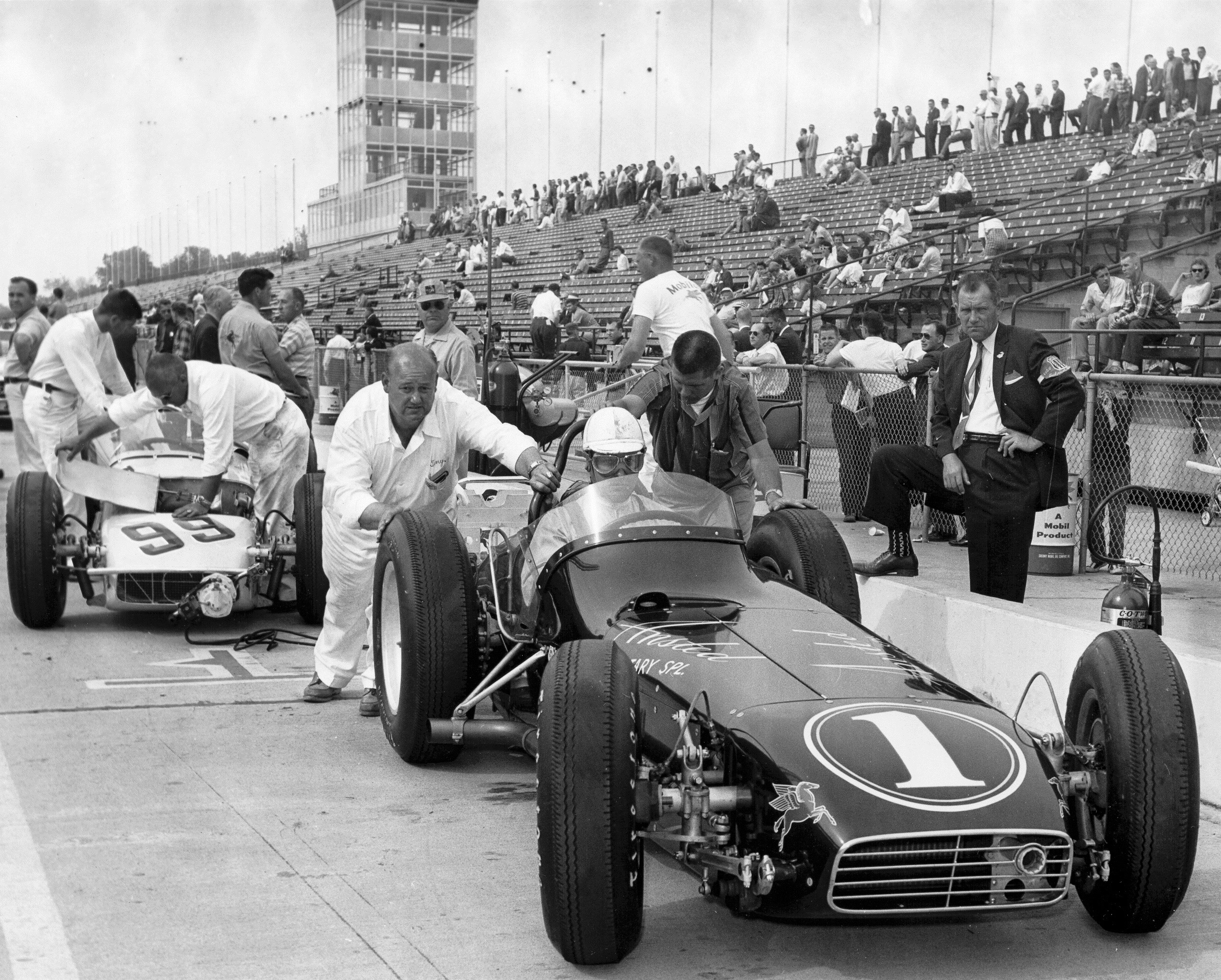
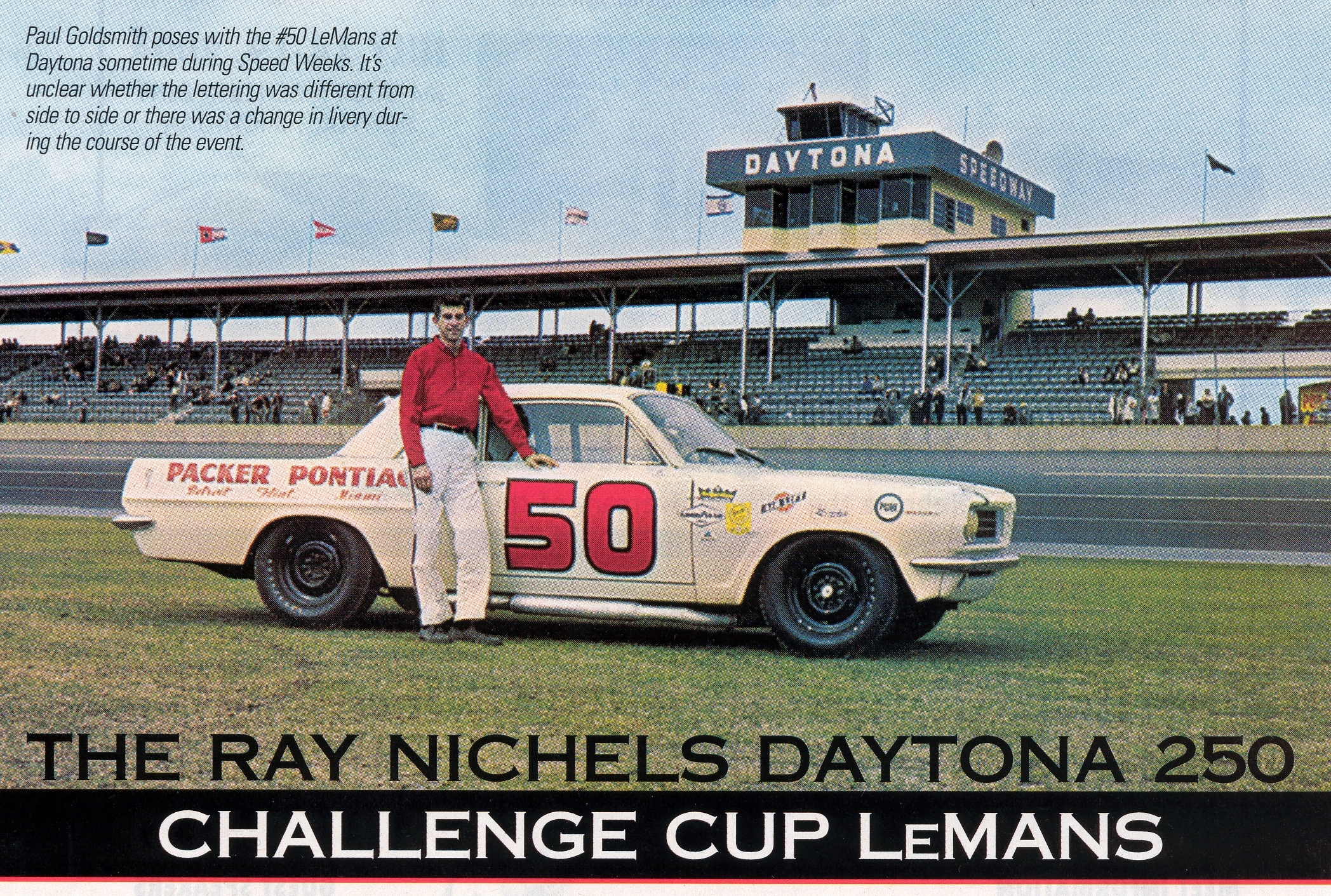
In 1963, Nichels and driver Paul Goldsmith delivered one of the most lopsided victories in Daytona Speed Weeks history, in the Challenge Cup 250, when Goldsmith piloted the Nichels Engineering #50 Super Duty 421 Pontiac LeMans to victory, beating 2nd place finisher A.J. Foyt by over 5 miles.

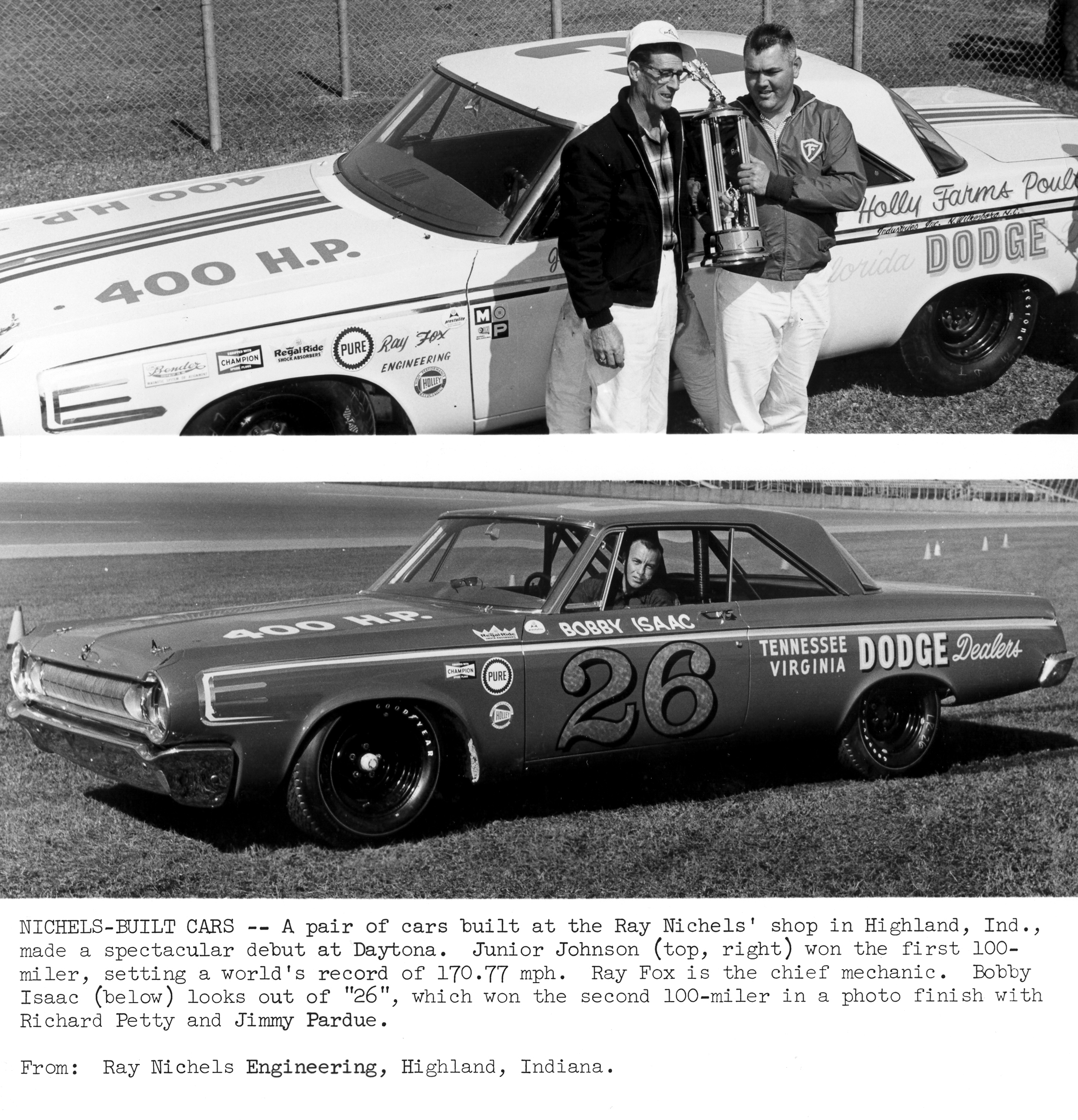
Later in 1963, Ray Nichels and Nichels Engineering became the “house” racecar builder for all of Chrysler Corporation. Nichels role with Chrysler was identical to his with Pontiac. Working for Ronney Householder, Nichels was commissioned to build the fastest and safest stock cars in the business, disseminate racing knowledge and design technology to all Chrysler teams in support of their collective racing efforts. Working with legendary stock car racers Cotton Owens, Ray Fox, Harry Hyde, Norm Nelson, and Petty Enterprises, Nichels Engineering did just that. It is no coincidence that the most prolific period in Chrysler stock car racing history was 1964-1970. Nichels Engineering-built stock cars won national stock car championships in USAC, NASCAR, ARCA and IMCA, several years running, setting speed records at tracks across America.

Ray Nichels and Nichels Engineering won three (3) National Stock Car Championships in USAC. Paul Goldsmith and Ray Nichels combined to win titles in 1961 and 1962. Then in 1967, Nichels and all-time winningest USAC Stock car driver Don White teamed-up for the USAC national championship.

In 13 years of NASCAR competition, Nichels Engineering campaigned cars raced 223 times, garnering 89 top-ten finishes, 62 top-five finishes, 12 Poles and 11 victories. Nichels Engineering was a winner at tracks such as Daytona, Bristol, Rockingham, Michigan, and Talladega. Nichels also won NASCAR pole positions at Daytona, Talladega, Charlotte, Rockingham, Darlington, Michigan, and Riverside.

Nichels Engineering was a seven (7) time NASCAR winner at Daytona from 1957-1970. Winning drivers were Cotton Owens, Bobby Isaac, Paul Goldsmith (2), AJ Foyt, Sam McQuagg and Charlie Glotzbach.

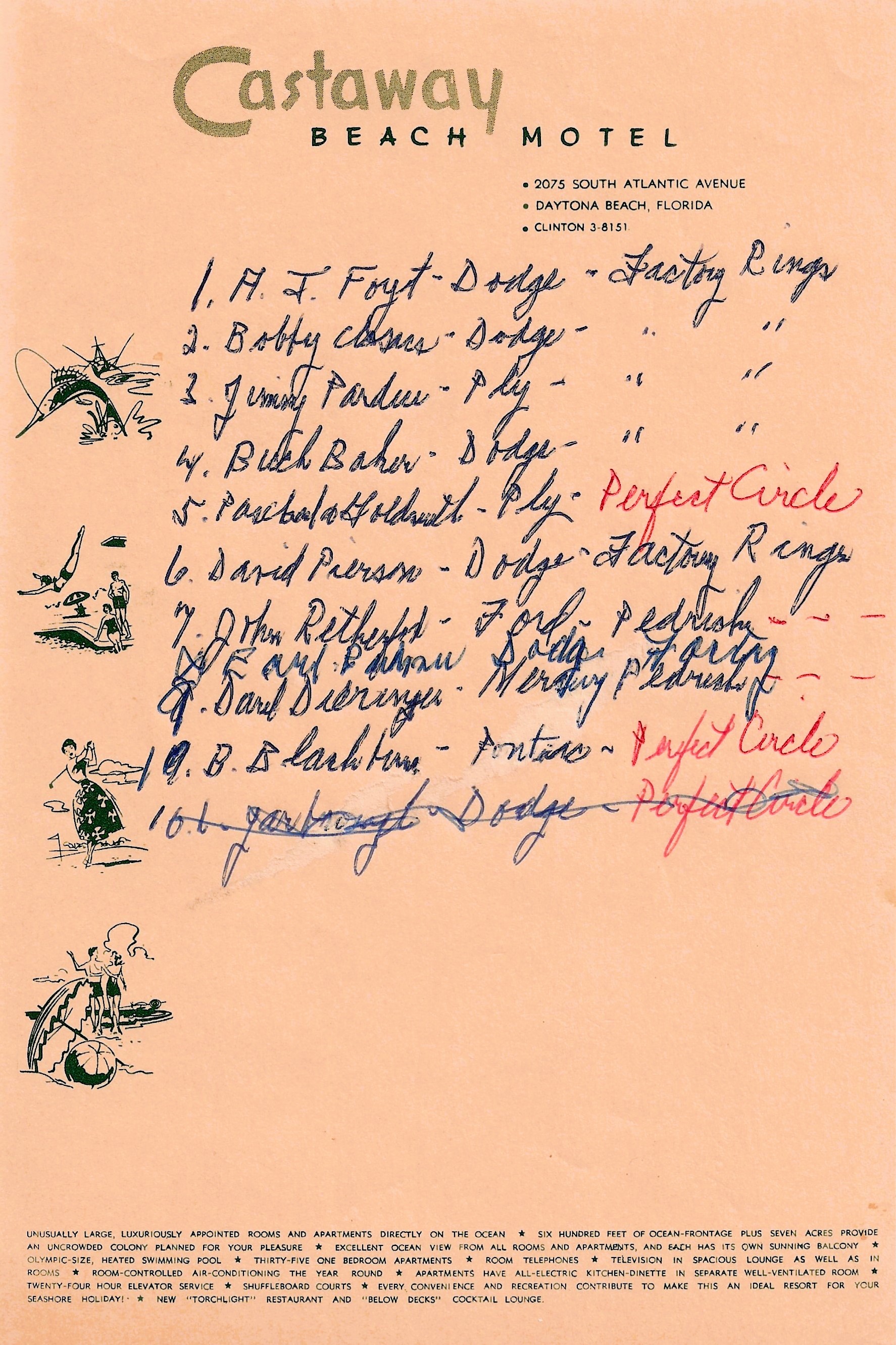
The list of drivers who piloted cars built by and/or campaigned by Ray Nichels and Nichels Engineering is synonymous with American racing excellence …. they are Bobby Isaac, A.J. Foyt, David Pearson, Bobby Unser, Al Unser, Roger Penske, Paul Goldsmith, Rodger Ward, Don White, Tony Bettenhausen, Richard Petty, Dan Gurney, Junior Johnson, Buddy Baker, Bobby Allison, Gordon Johncock, Pat O’Connor, Paul Russo, Mario Andretti, LeeRoy Yarbrough, Jim Hurtubise, Fred Lorenzen, Charlie Glotzbach, Glenn “Fireball” Roberts, Joe Weatherly, Marvin Panch, Cotton Owens, Banjo Matthews, Sam McQuagg, Joe Leonard, Len Sutton, Darel Dieringer, Troy Ruttman, Dave Marcis, Richard Brickhouse, Ramo Stott, Ernie Derr, Jimmy Pardue, James Hylton, Butch Hartman, Roger McCluskey, Bobby Johns, Ray Elder, Norm Nelson and Lloyd Ruby.

On April 25th, 1996, Ray Nichels was inducted into Mechanics Hall of Fame within the International Motorsports Hall of Fame located in Talladega, Alabama. On the same day, Indiana Governor, Evan Bayh, awarded Ray Nichels the “Sagamore of the Wabash,” the highest distinguished service honor bestowed upon an Indiana citizen by its governor.

Copyright© 2005 — Wm. LaDow / LaDow Publishing

Nichels Engineering Burns up the Brickyard in an effort to accomplish Pontiac Perfection …

Speedway Sightings …

By: Wm. LaDow
Region Racers at the Brickyard
Published in the Post-Tribune — July 23, 2008
Speedway, Indiana
_________________________________________________________

If you listen to the NASCAR PR dept. you might be led to believe that stock car racing in America began in 1972, commonly referred to as the “modern era”. But in reality stock car racing has been around since the 1940s and in the early years NASCAR was just another run-of-the mill sanctioning body in the business of stock car racing.

Although NASCAR staged their first race in 1949, it was the American Automobile Association (AAA) who was sanctioning stock car racing in the 1940s before NASCAR even existed. Following AAA’s decision to leave auto racing in 1955, the primary sanctioning body in America became the United States Auto Club (USAC). Sanctioning every type of auto racing from midgets to stock cars to Indy cars, USAC was the benchmark for the management of American auto racing.

For the next decade USAC and NASCAR vigorously competed for the right to call themselves the definitive rules maker in America racing. Although there were great political differences between the sanctioning bodies, by the early 1960s, there was one constant between the two.

That constant was that the premier racing operation in America was located inside a non-descript blonde-colored brick building at 8944 N. Cline Ave. on the border between Highland and Griffith. Its name was Nichels Engineering.

By this time in its young history Nichels Engineering had already raced in the Indy 500 ten times, garnering a pole in 1957, a fifth place finish in 1959 and a third place finish in 1960. Ray Nichels’ Indy cars had set world closed course speed records at both the Chrysler Proving Grounds in Michigan and the world’s most demanding high-banked super-speedway, the 38-degree banked, 2.6 mile long Autodromo di Monza in Italy.

Ray’s stock car operation was even more prolific, becoming the “house” racecar builder for Pontiac in 1956 and going on to capture both the pole and the race victory at Daytona in 1957 in just its first try.

By 1961, under Ray’s guidance, Pontiac dominated American stock car racing. Nichels Engineering driver Paul Goldsmith captured the USAC National Championship with 10 wins, 7 poles and 16 top-five finishes in 19 races. Overall Pontiac performance in USAC was 14 wins, 10 poles and 38 top-five finishes in 22 races. In NASCAR, Pontiac captured the manufacturer’s championship for the first time ever with an overall Pontiac performance of 30 victories in 52 races. To bring 1961 to a fitting climax, Nichels Engineering and its founder, Ray Nichels, M.D. (Doctor of Motors) pursued what Ray would later label as “Pontiac Perfection.”

Pursuit of the 24 Hour Speed and Endurance Records at Indianapolis

For some time, Ray had wanted to show others how his racecars put a premium on performance, endurance and safety. Nichels also wanted to parlay his high-speed automotive testing business with companies such as Pontiac, Goodyear Tire & Rubber Co., Dow Chemical, Prestolite, Standard Oil, Raybestos and Monroe, into a quest for history, proving that stock cars built by Nichels Engineering could run faster and further than any other in history. Ray knew the best place in the world to pursue this quest would be at America’s palace of speed, the Indianapolis Motor Speedway,

Since the 1920’s, the Stevens Challenge Trophy had been awarded to those who successfully attempted to set a 24-hour endurance mark for speed and distance at the Brickyard. In 1954, as part of the “Stevens Challenge” Chrysler set the 24-hour record at 2,157.5 miles with an average speed of 89.89 mph. In addition to the 24-hour record attempt, Ford established the 500-mile record at the speedway, running 111.916 mph, as well as the one-lap speed record of 117.832 mph. It was Nichels intention to capture all three records and set a new benchmark for stock car speed and endurance.

Nichels Engineering’s driver lineup for the effort was truly an all-star cast. First, from USAC, was 1961 National Stock Car Champion Paul Goldsmith. Joining him was past Indianapolis 500 winner Rodger Ward. Filling out the lineup was champion midget car driver, well-respected Indy driver and two-time Nichels winner on the USAC stock car trail during the 1961 season, Len Sutton. The other three drivers would come from NASCAR, and they could arguably be labeled the best in business. First was defending Daytona 500 winner Marvin Panch. Joining him was the driver with the most wins in NASCAR in 1961, Joe Weatherly. Rounding out the team was none other than NASCAR star Glenn “Fireball” Roberts. On the mechanical side, Nichels Engineering assembled a virtual “who’s who” of mechanical geniuses. On his team were Dale “Tiny” Worley, Cotton Owens, Bud Moore, Banjo Matthews and Smokey Yunick. In addition, Ray employed his Nichels Engineering championship mechanical staff of Ernie Dascenzo, Ralph Knopf, John Johnson, Don Aspy, and Terry Jones.

Two brand-new Pontiacs were prepped for the challenge, a 1962 Catalina Coupe and a 1962 Police Enforcer. (sold by Pontiac as a cruiser to law enforcement agencies across the country).

On a dry, cold Tuesday, November 20th, the record-breaking attempt started at 3 p.m. From a standing start, USAC’s Goldsmith in the Pontiac Enforcer and NASCAR’s Panch in the Pontiac Catalina Coupe took the green flag.

Goldsmith made the first Nichels Engineering statement by setting a new one-lap speed record of 118.953 mph on only his second circuit around the storied Brickyard.

Then, before the team had a chance to settle in, Goldsmith came into the fourth turn hot with his throttle stuck wide open. Trying to manhandle the out-of-control beast, Goldy grazed the concrete wall and slid along it far enough to destroy his right front tire and bend up a lot of sheet metal before he got the car back under control. He pulled into the pit, hoping that he hadn’t ruined the run for the record. Nichels quickly surveyed the damage and debated whether to repair the car and start the run over again, or try to systematically repair the car during the upcoming pit stops. This was a race against time and distance. Long pit stops could prove to be disastrous over the course of the next 24 hours.

Nichels talked it with over with Worley, Owens and Moore, and decided to go for it. They would get the car running as soon as possible and repair one particular damaged area during every pit stop. It would be dark soon and the headlights would have to be operational by then, or the drivers wouldn’t be able to see where they were going, as the Brickyard had no lights. The cars were going to use their headlights to see and rely on oil-burning smudge pots located around strategic areas on the track as guides to where the “groove” was.

Quick body repairs and new tires put Goldsmith back out on the track in 4 minutes and 47 seconds. As the laps added up, the drivers began their rotations, taking turns in both cars. Setting the first record was the Catalina Coupe at the 500-mile mark. Running at a speed of 113.292 mph, the Catalina eclipsed the 500-mile record in 4 hours, 24 minutes and 48 seconds. Drivers responsible for the Catalina’s success were Panch, Sutton, Roberts and Goldsmith.

Following his stint in the Catalina and now in the previously damaged Pontiac Police Enforcer, Fireball Roberts proved to everyone that the Nichels team was not to be denied, setting a single-lap record of 122.132 mph on the 205th lap. Ironically, Nichels himself had made an error and was of the belief that the Enforcer still had a shot at breaking the 500-mile mark, too. Thinking Fireball was on his 197th lap, Ray signaled Roberts to “carry the mail.” Roberts responded by destroying Goldsmith’s previous one-lap record by over three miles per hour.

At 4 a.m. it began to rain. As the 2.5-mile asphalt oval glistened in the moonlight, Ray’s long years of race tire development paid off handsomely as his team immediately began installing tires with a softer compound designed for just this eventuality. When daylight began to reappear, the Nichels Pontiacs were running so well in the rain that in one instance Ray ran onto the track to chew out Sutton, who had just been clocked at 114 mph.

The last 11 hours of the 24-hour quest were run in the rain, with snow and sleet appearing periodically.

At 10:56 a.m., Nichels Engineering’s team was rewarded for all of their efforts when the previous 24-hour distance record was shattered with over four more hours to go.

In the end, the black-and-white Nichels Pontiac Enforcer with Rodger Ward behind the wheel took the checkered flag, traveling 2,586.878 miles during the 24-hour run, for an average speed of 107.787 miles per hour. The Nichels Catalina Coupe with Len Sutton crossing the finish line ran 2,576.241 miles during the 24-hour run, for an average speed of 107.343 miles per hour.

Nichels Engineering once again proved it was the benchmark that all others would be measured by, as those records still stand to this day.

Region’s connection to Indy touched many …

Region Racers at the Indianapolis 500
Speedway Sightings

By: Wm. LaDow
Daily Trackside Reports from the Indianapolis Motor Speedway
Published in the Post-Tribune — May 25, 2008
Speedway, Indiana
________________________________________________________________

Indianapolis has long been the destination of many world-class racers.

The 2 and 1/2-mile Mecca of American motorsports is where young boys and now young girls dream of racing their way to Indianapolis 500 glory.

The path to Indy comes from all corners of the Earth.

Few realize, however, how many of those traveling to racing immortality have made a stop in the Calumet Region during their respective eras of racing greatness.

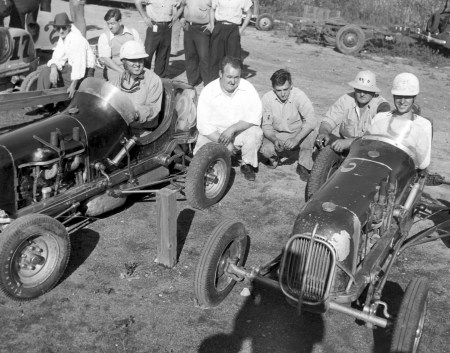
The most commonly recognized example is New York state’s Lee Wallard taking the reins of the Lowell-based Belanger No. 99 in 1950 and driving the legendary Kurtis-Kraft to the winner’s circle for owner Murrell Belanger.

Many racing fans know of Tinley Park’s Tony Bettenhausen’s two national championships and 14 entries in the Indianapolis 500, driving much of his career for Belanger before Tony’s death in 1961.

Hammond’s contribution in the late 1940s and early 1950s was resident Paul Russo, who also drove in 14 Indianapolis 500s and was recognized in his time as one of the best “shoes” in the business.

Russo’s partnership with legendary race mechanic and car builder Ray Nichels gave the region one of the most beloved mounts in Indy 500 history, the Russo/Nichels Special, affectionately known by racing historians as “Basement Bessie.”

That success spawned a migration of top-notch drivers through the region for the next 22 years, all of them tied to Ray Nichels and Nichels Engineering.

First was 1950 Indy 500 winner Johnnie Parsons, who drove Nichels-wrenched Indy cars is 1953 and 1954.

Parsons was then followed by Sam Hanks, who was hired by Nichels as part of Nichels Engineering’s management of the Firestone Racing Tire Test program.

Hanks and Nichels set a closed-course world speed record in 1954 of 182.550 miles per hour with a Nichels prepared Kurtis-Kraft Roadster powered by a 331 cubic-inch Hemi engine. Hanks won the 1957 Indianapolis 500 and retired in victory lane.

He was followed by national sprint car champion, Indy 500 pole winner and Monza, Italy, world record holder Pat O’Connor, who drove for Nichels from 1954 through 1958 before he lost his life in the 1958 race.

Next was Rodger Ward, who test drove for Nichels in 1958 and then drove stock cars in USAC for Nichels Engineering in 1961 and 1962. Ward won the Indianapolis 500 twice, 1959 and 1962.

Ward was joined at Nichels Engineering by A.J. Foyt, who drove for Nichels from 1961 through 1964 and then again in 1971. Foyt is a four-time Indy winner, capturing the 500 in 1961, 1964, 1967 and 1977.

The USAC stock car team that Nichels assembled with Foyt and Ward also included six-time Indy 500 entrant and two-time national stock car champion Paul Goldsmith. The fourth driver on the Nichels team was Len Sutton, a seven-time Indy 500 driver.

Joe Leonard joined the Nichels Engineering stable in 1964 and won the USAC Rookie of the Year award in a Nichels stock car and then moved on to Indy, where he won back-to-back USAC national IndyCar championships in 1971 and 1972.

Nichels employed Bobby Unser from 1971-73 as one of his key stock car drivers in USAC. Unser is three-time Indy 500 winner, with victories in 1968, 1975 and 1981.

Driving for Ray Nichels’ son, Terry, in 1972 was Gordon Johncock. He would go on to win the Indianapolis 500 a year later in 1973 and again in 1982.

Driving for Terry Nichels in 1973 in the USAC stock car competition was Johnny Rutherford. “Lone Star JR” won Indianapolis in 1974, 1976, and 1980.

Make no mistake about it. Although Northwest Indiana has only one Borg-Warner victory to its credit, drivers who have visited Indy’s winner circle, on many occasions, came through the area to do it.

The Chicago Gang ….

Speedway Sightings …

By: Wm. LaDow
Daily Trackside Reports from the Indianapolis Motor Speedway
Published in the Post-Tribune — May 24, 2008
Speedway, Indiana
_________________________________________________________

The first recognized race for midget cars was held in California in the summer of 1933, and by 1937 it was one of America’s fastest growing recreational experiences, spreading across the nation like wildfire.

Midget racing quickly became known as “diminutive dynamite.”

Midget cars, weighing approximately 750 pounds, with wheelbases ranging from 66 to 72 inches and car bodies that rested as low as four inches off the ground, were miniaturized versions of the much larger AAA Championship Cars that were running at tracks like Indianapolis. These lightweight cars ran at speeds upwards of 70 to 80 mph down the straightaways, taking the turns between 40 and 50 mph. Taking the turns in a midget, at these speeds, was a test of skill and courage.

The smaller midget cars allowed for much more economical racing as they could be run on smaller-sized dirt or cinder tracks than the big Champ Cars. The normal track for such racing was a quarter mile in distance, which meant that any cinder track circling a normal-sized high school football field could stage a midget race.

In time, midget cars would be racing on outdoor tracks as big as a mile and on indoor tracks as small as one-seventh of a mile. The beauty of a midget car race was that it could be staged just about anywhere. Once the midget craze took hold, drivers towed their midget cars across the country, looking for the most lucrative winning purses.

In the Chicago area, the first midget race was held at the old Calumet Speed Bowl in Lansing in 1934. One of the first midget car races held within the city of Chicago was run on May 19, 1935, at Soldier Field. Soon summertime races could be viewed at Raceway Park in Blue Island, Riverview Raceway off of Western Avenue, as well as Soldier Field. In the winter, they ran venues such as the 124th Field Artillery Armory on 52nd Street and Cottage Grove and the Chicago Amphitheatre.

Drivers running Chicago area midget tracks soon gained national prominence. Drivers such as Harry “Leadfoot” McQuinn, Ray “The Highland Park Flyer” Richards, Myron “The Milwaukee Blitzkrieg” Fohr, Teddy “The Flying Rail” Duncan, Pete “The Flying Serb” Romcevich, Frank “Candy Man” Burany, Bob “Bombshell” Muhlke, Joie “Chief Wahoo” Chitwood, and Mike “The Flying Irishman” O’Halloran, all raced on tracks in and around the windy city.

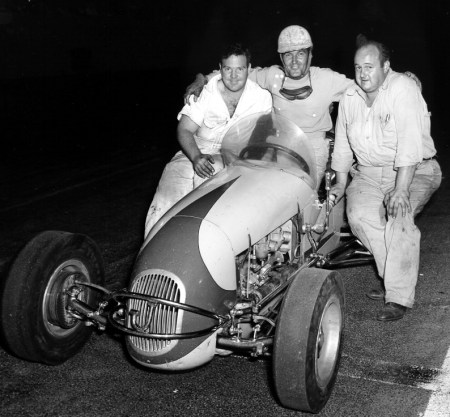
But within this group of great racers, even a smaller more revered fraternity existed and it became known as The “Chicago Gang.” The fast-paced club consisted of Wally “The Human Cyclone” Zale, Tony “Tinley Park Express” Bettenhausen, Dennis “Iron Duke” Nalon, Cletus “Cowboy” O’Rourke, Jimmy “South Side Speed King” Snyder, Emil Andres and Paul Russo.

Though all of the members of the “Chicago Gang” came to win various track championships, Wally Zale was the driver who set pace. In 1936, Zale won a record 65 features in a single season. He broke his own record in 1940 scoring 67 victories, believed to be the greatest number of wins in a single season by a midget driver. Tragically, Zale’s career ended prematurely when he was killed in his own passenger car when struck by a train in April of 1942.

All but O’Rourke went on to race at Indianapolis.

Their collective record in Indianapolis 500 competition was quite impressive, 52 starts, three poles, seven top five finishes, 15 top-10 finishes, $233,888 won in competition, 5841 laps completed for a total of 14,602 miles run at the worlds greatest speedway.

Crown Point’s Logan Gomez will start ninth …

Speedway Sightings …

By: Wm. LaDow
Daily Trackside Reports from the Indianapolis Motor Speedway
Published in the Post-Tribune — May 23, 2008
Speedway, Indiana
_________________________________________________________

The sound of engines returned to the Indianapolis Motor Speedway on Thursday as the Firestone Indy Lights Series went through practice and qualifications for today’s running of the Firestone Freedom 100.

Dillon Battistini in the No. 15 Panther Racing entry recorded a two-lap average of 188.397 mph on the 2 and 1/2-mile oval to make his first Firestone Indy Lights start at IMS.

“It’s probably the most challenging oval that I’ve driven,” said Battistini, who won the season-opener at Homestead-Miami Speedway. “It goes really quick, and you have to be really accurate and try not to lose your concentration.”

James Davison in the No. 11 Lifelock/Sam Schmidt Motorsports car will start in second after posting an average of 188.390 mph.

Wade Cunningham, in the Royal Spa/Brian Stewart Racing No 33 car will start in third.

Ana Beatriz captured her fourth consecutive top-five start with an average of 187.875 mph in the No. 20 Healthy Choice/Sam Schmidt Motorsports car.

“It’s just really fun to race here and I hope to continue doing well in the season,” said Beatriz, who was third at St. Petersburg.

The final qualifier of the day was Crown Point’s Logan Gomez in the Menards entry for Guthrie Racing. His two-lap average of 187.053 mph put him on the inside of the fifth row and was the best qualifier of four Guthrie Racing entries.

“The Menards car was stuck to the track,” Gomez said. “We specifically worked on a race setup, so that’s what we qualified with.”

The top seven qualifiers were separated by less than half a second

Gasoline Alley Notes

Sarah Fisher Racing announced that text4cars.com will serve as the team’s primary sponsor for her No. 67 entry. Text4car.com is replacing ResQ and Gravity Entertainment, who reneged on their agreement as the team primary sponsor in just the last few weeks. “I can’t express how emotional I feel at this point and time,” Fisher said. “I realize this is a gift with only 72 hours left before the race.”

LONG BEACH ON BOARD: The Grand Prix Association of Long Beach (GPALB) and the Indy Racing League, the sanctioning body for the IndyCar Series, have agreed to a five-year contract that will have the cars and stars of the IndyCar Series racing on the streets of Long Beach beginning next year through 2013.

Also, Michael Andretti informed guests at the annual Indianapolis Motor Speedway gathering of the Michael Andretti Foundation that Andretti Green Promotions, LLC has completed the purchase of the assets of the Grand Prix Association of Toronto and are planning to stage their first IndyCar Series event there in 2009.
The Granatelli Brothers …

Speedway Sightings …

By: Wm. LaDow
Daily Trackside Reports from the Indianapolis Motor Speedway
Published in the Post-Tribune — May 22, 2008
Speedway, Indiana
__________________________________________________________

When racing fans hear the name Granatelli, the first image that usually comes to mind is that of a large, jovial man wearing a white sport coat, covered in red, oval-shaped, STP decals. Although an accurate image of Andy Granatelli, it is a far, far cry from what the Granatelli name really means to the legacy of American motorsports.

You see there wasn’t just one Granatelli, there were three and each contributed significantly to how Americans eventually nurtured their cars. It was the Granatelli Brothers who brought the word “high” to high-performance, creating a multi-million dollar business based on the automotive parts aftermarket. It was the Granatellis who would create the concept of the “Speed Shop” as we would come to know it, and they would do it by example, becoming a major force in American motorsports.

Tough beginnings

As youngsters growing up in Depression-era Chicago, the three Granatelli boys, Joseph (born 1919) Andrew (born 1923) and Vincent (born 1927), leaned about life the hard way.

Their father, Vincent, an immigrant born near Palermo, Italy, became a widower when the boys were just 16, 12 and 8, respectively. In the 1920s, Papa Granatelli worked as a grocer during the day and taught himself how to read and write English at night. It was his work ethic that seemed to catch fire in the hearts of his young sons.

As they got older, they hauled around a car battery during cold Chicago winter mornings and gave jump starts to stalled cars for a dollar. All three of the boys worked multiple jobs, pooling their money together to fund their various money making schemes until Joe was finally old enough to get a job as a mechanic. It wasn’t long till he was one of best “wrenches” on the north side. He then taught Andy and they both taught Vince.

Getting into cars

With all three becoming master mechanics, their wallets began to thicken with cash. They bought new cars and souped them up, racing on rural roads for money. Fast cars brought easy money, and that bought the boys more high-performance parts to make their cars even faster. Again they pooled their cash and opened up Andy’s Super Service at 4506 N. Clarendon, just off Lake Shore Drive. The business was a huge success.

But as with just about every Granatelli success there came a setback. As the boys were beginning to bank some serious money, they showed up for work the morning of Aug. 6, 1944, to find that they had been the victim of a heist. Not only was everything in the shop gone — tools, equipment, parts, and cash register — but the boys’ two hot rods and tow truck also were driven away by the thieves. With no insurance, they had to start over from scratch.

They devoted their next business strictly to speed. Opening up a shop at 5058 North Broadway, they continued their mechanical mastery working on cars and began to contract out their sales services for other companies that were producing high-performance parts, such as cams, crankshafts, intake manifolds and superchargers. Their business took off as they became known for their engineering expertise building high-performance Ford V8 engines.

Their dedication to selling the “secret of speed” took them racing, first as drivers, then as promoters. The Granatelli Brothers founded the Hurricane Hot Rod Racing Association and put tens of thousands of racing fans in the seats of Chicago’s Soldier field, night after night. Short tracks, drag strips, anywhere people could race, the Granatellis were right there to manage the racing and sell the racers some more “speed.”

Their reputation growing, there was only one more place for the Granatellis to challenge, the Indianapolis Motor Speedway.

Off to Indianapolis

They showed up at Indy in 1946, right after World War II. The Granatellis ran Grancor cars out of their own speed shops from 1946 through 1954, but didn’t make it to the winner’s circle. Their best showing was a second place with Jim Rathmann in 1952. All the while they continued to grow their reputations as some of the finest engineering minds in the racing business, all with very little formal education.

By 1956, the Granatelli Brothers were doing $14 million a year with Grancor as masters of the concept of mass merchandising high-performance auto parts. In 1957, they walked away from it all and retired — or so they thought.

Relocating to California, Andy got the bug to get back in business and he and Joe purchased the supercharger business of Paxton Products Corporation.

They sold it for a hefty profit three years later to Studebaker, with Andy joining the management of South Bend automaker in the deal. (Joe reacquired the company years later, serving as president until 2003.)

Enter the Novis

The next few years, pushing the high-performance benefits of their superchargers, the company set more than 300 land speed and endurance records at various racing venues. These successes led to opportunities with Chrysler and ultimately, engineering a redesign of the famed Indianapolis Novi engine. It was during this time that the Granatelli Brothers started racing the fan favorite Novis at Indianapolis.

Then the one product that would define Andy Granatelli as the guru of auto product sales and marketing surfaced in 1963, when Studebaker’s Chemical Compound Division was looking for guidance. Andy took over as CEO, leaving his other businesses in the sound hands of his brothers and took a product by the name of STP, short for Scientifically Treated Petroleum and grew the business to a level of more than 80 percent market share.

It was a marriage made in heaven. Granatelli mass-marketed his product like none ever before. The STP logo became the most recognizable in all of advertising, as the company became the advertising “voice” for all of motorsports through its huge (and overly generous) advertising budget. So powerful was the image of Granatelli and STP’s marketing, that a cartoon was published in the New York Times of Neil Armstrong setting foot on the moon and the first thing he saw was an STP decal.

Heartbreak and triumph

The meteoric growth of their businesses allowed the Granatelli Brothers to go racing more than ever before. They became an institution at Indianapolis. They raced at the Brickyard over the course of the next three decades.

Their most defining moments were: 1) dominating and almost winning the 1967 Indy 500 with Parnelli Jones piloting the STP Turbine “Whooshmobile” before a $3 gearbox bearing cost them the race with just three laps to go; 2) winning the 1969 Indy 500 with Mario Andretti driving and; 3) winning the 500 in 1973 with Gordon Johncock. The Granatelli brothers were so innovative that race sanctioning bodies soon began to legislate their cars out of existence.

Next they went to stock car racing first with Nichels Engineering and Fred Lorenzen in 1971 and Petty Enterprises, in 1972, a relationship that continues to this day.

The myriad of their automobile related businesses kept the boys busy into the new millennium. Joe, Andy, and Vince continued to be leaders by example and amassed personal fortunes during the course of their lives.

Joe passed away in 2003. Andy resides in southern California and spends his time as a philanthropist. Vincent is retired and resides in Arizona.

The Granatelli brothers story is one of hard work, commitment and never giving up, all qualities they learned growing up on the streets of Chicago.

Field set for Indy’s 92nd running …

Speedway Sightings …

By: Wm. LaDow
Daily Trackside Reports from the Indianapolis Motor Speedway
Published in the Post-Tribune — May 19, 2008
Speedway, Indiana
_________________________________________________________

The field is now set for the 92nd running of the Indianapolis 500.

“Bump” day at Indianapolis Motor Speedway on Sunday was one of illusion and late day drama.

Sunny skies were combined with stiff winds making for a very challenging day on the track.

For those who stayed until 6 p.m., they saw 40 minutes of late-day furious activity that saw two drivers bumped and a crash end a valiant attempt by Mario Dominquez to make the field.

Done for the weekend even before the track opened for business was 2007 Rookie of the Year Phil Giebler and his No. 88 American Dream Racing Panoz that crashed terribly in Turn One Saturday afternoon, completely destroying the car

After spending the night at Methodist Hospital for pulmonary contusions and a cervical sprain, Giebler was released Sunday afternoon.

Team owner Eric Zimmerman announced that the team is in the process of acquiring a new Dallara (they were the only team here with an outdated Panoz chassis) and will be entering the June 7 IRL race at Texas Motor Speedway with Jaques Lazier behind the wheel. Following that race, they plan on running three-to-four more races in the 2008 schedule with Giebler returning to the cockpit when he is cleared to drive.

The day’s on-track activities started with a morning practice that saw 13 drivers run 225 laps. At that point, drivers who were still on the outside of the grid looking in were A.J. Foyt IV and Dominquez in the No. 96 Pacific Coast Motorsports Dallara, who was back running after crashing hard Saturday.

Still in Gasoline Alley during the practice session was Max Papis and his Rubicon Race Team trying to get the No. 44 LifeLock Dallara assembled from parts they had been acquiring since his crash, also Saturday morning.

The practice ended prematurely when Davey Hamilton’s No. 22 Vision Racing Dallara blew an engine.

Less than an hour later, the track opened for qualifying.

Foyt was the first to challenge the vast speedway, running a four lap average of 219.075 mph issuing the first “bump” of the day to Marty Roth and placing Buddy Lazier on the bubble.

At 1:14, Papis finally made it on the track with his reconstructed Dallara.

At 1:15, Roth and his No. 25 Roth Racing Dallara ran a qualifying run of 218.965, bumping Lazier from the field and putting Roger Yasukawa on the bubble.

At 2:47 p.m., a freak accident occurred that had many in the paddock shaking their heads, when Foyt made contact with the Turn 3 wall. He initially appeared to have had some sort of mechanical failure on his way out of the pits. By the time he got around the track, the car spun and backed hard into the wall. It was later learned the fuel cap wasn’t properly attached and flew off AJ’s car as he headed into Turn 1. By the time he got to Turn 3, he had ethanol on his tires, lost traction and had the car come around on him. He was released by the Clarian Infield Medical Center with a minor burn on his neck and some singed hair.

The next qualifying attempt came at 4:23 p.m. with Dominquez running a much too slow 217.775 mph four lap average and was unable to crack the field of 33.

At 5:20, the tension that had been simmering all day finally boiled over.

Lazier in the No. 91 Hemelgarn/Johnson Dallara, ran three laps at 217.272 mph, 217.204 mph, and 217.097 mph before waiving off his attempt.

Dominguez then put down a four lap average of 218.620 mph, bumping Yasukawa from the field, but by only one spot, leaving Dominguez himself on the bubble.

Next in line was Yasukawa in the No. 98 CURB/Agajanian/ Beck Motorsports Dallara, who ran a solid first lap of 218.894 mph. But his four lap average of 218.559 mph wasn’t enough as it left him just five hundredths of a second short of making the field.

Papis in the Jason Priestly owned entry, started to roll off next, but a clutch failure finished his day and month.

Then to the cheers of many fans lining the main straightaway, who clearly had made Lazier a sentimental favorite to make the field, Buddy’s car was pushed into the qualifying line.

With Lazier in the cockpit, Dan Wheldon leaned in and said something to Lazier, before he rolled off onto the track. The former Indy 500 winner then went out and blistered his competition with a four-lap average of 219.015 mph, bumping Dominguez from the field and leaving Roth on the bubble.

Yasukawa went out one last time and with an average at 218.476 and failed to bump Roth.

At 5:57 p.m. Dominguez in his No. 96 Pacific Coast Motorsports Dallara finally rolled onto the track for his qualifying run. His first lap of 219.780 looked solid, and as he raced down into the first turn the gun sounded to signal the end of qualifying, leaving a helpless Roth next in the qualifying line.

But it wasn’t to be. Dominguez spun on the exit of Turn 1 making contact with the outside wall.

His car got airborne for just a moment, finally settling on the ground, ending his attempt and his month.

Roth was safely in the race and Buddy Lazier, will start his 16th Indianapolis 500 on Sunday.

Bamboozled at the Brickyard …

Speedway Sightings …

By: Wm. LaDow
Daily Trackside Reports from the Indianapolis Motor Speedway
Published in the Post-Tribune — May 18, 2008
Speedway, Indiana
_________________________________________________________

Ask any engineer what makes an IndyCar go and you will likely get a long dissertation about the internal-combustion engine, gearbox ratios and the aero effects created by the car’s downforce. In fact, if you listen long enough, you will be bombarded with enough physics to make your eyes glaze over and head swim.

Ask any car owner what makes an IndyCar go and they will say one word … money.

The faster you want to go, the more money it takes.

One of the greatest misconceptions in motorsports is that race team owners can operate on the money they win on the track. Nothing could be further from the truth.

It takes sponsorship from either a privately held company or a corporation to adequately field a viable entry in IndyCar racing. And that doesn’t mean just writing a check; it means building a partnership between the car owner and the company that they both feel can successfully market their products.

A classic example of the pitfalls encountered in developing a solid relationship between a race team owner and a quality sponsor reared its ugly head here at the Speedway during the month of May, severely challenging the people at Sarah Fisher Racing.

Fisher’s trailblazing journey through IndyCar racing has produced several Indianapolis 500 and Indy Racing League records that still hold: youngest woman to compete (2000), fastest woman to qualify (229.439 mph, 2003), first woman with a podium finish (third place, 2000, Kentucky Speedway), first woman in North America to win a pole position (2002, Kentucky Speedway) and voted Most Popular Driver (2001, 2002, 2003).

So when the 27-year-old Fisher decided to start her own race team in 2008 with her husband Andy O’Gara and his father, John O’Gara, both IndyCar racing veterans, it was clearly a labor of love that drove her.

To complete in the IndyCar series it’s estimated that it takes $7-10 million, per car, to run with the leaders. Fisher’s effort is substantially shy of those figures. She operates out of a small shop on Rockville Road in Indianapolis and came to compete at the Speedway with one car, one engine, no wind-tunnel testing and virtually no laps on the car. But she was ready to compete and has qualified for her seventh Indianapolis 500.

What she wasn’t ready for was her primary sponsors disappearing during the first week of May. After trumpeting the arrival of her new sponsors at a news conference in April, in front of a crowd of 75 media members in attendance for the ribbon cutting of Sarah Fisher Racing’s new shop, it appeared that both ResQ, a sports drink company from Gulf Breeze, Fla., and Gravity Entertainment of Fort Lauderdale, were the very type of sponsors she needed.

Neither copmany has come through with the promised dollars, leaving Fisher’s sidepods virtually bare this month. She’s been successful in lining up several associate sponsors that, along with contributions from fans, are helping to keep the operation going, albeit day to day.

NWI’s “contribution”

The terrific challenge that Sarah Fisher Racing has encountered in the last few weeks is not without precedent in Indianapolis 500 or big-time auto racing history.

Probably the most glaring example of a race team laying it all out on the line for a sponsor who was never really confirmed as paying his way was the run of the 1972 “Mystery” Eagle. Dan Gurney and his company, All American Racers were building some of the most technologically advanced Indycars (labeled the “Eagle”) in the world when they showed up at Indy for the month of May in 1972.

Gurney’s primary car, the No. 6 Olsonite Eagle, was the class of Gasoline Alley. Bobby Unser took the pole for the race at a new track record of 195.940 mph, beating the former pole speed record by 17.244 miles per hour, the largest track record incremental increase in the history of IMS.

Team owner Gurney was thrilled. Even more inviting was the proposition that if he could find sponsorship, he could run a second car.

Enter Chris Vallo, then of Highland. Vallo was the man behind CV Enterprises, whose logo sported the slogan “You Name It.” Vallo fancied himself an entrepreneur and was introduced to Gurney by Unser, who met him while driving for Nichels Engineering in 1971.

Gurney was desperate for sponsorship and Vallo was looking for another avenue to pursue his financial goals.

What wasn’t apparent to many at the time was that Vallo was being sued by Ray Nichels, who alleged Vallo had defaulted on his agreement to sponsor a $7 million stock car program preparing Pontiacs in NASCAR for David Pearson and Plymouths for A.J. Foyt and Unser in USAC.

Before anyone knew it, the No. 48 Mystery Eagle, driven by Jerry Grant, appeared on the track with the big CV Enterprises oval logo. The car ran so well it almost won the race. Grant was leading with 12 laps left when he unexpectedly pitted because his right-front tire was out of balance. During the confused stop, he was given fuel from Unser’s tank and subsequently was disqualified and scored 12th.

There was much discussion about who the man was behind the “Mystery” Eagle at Indianapolis that year.

Not long after Indianapolis, Vallo vanished from the Indy-car scene as he continued to fight a handful of lawsuits in Lake and Porter counties. He eventually would be imprisoned on two separate occasions and died in 2000.

Interview requests about Vallo and his relationship with Gurney have been politely refused by Gurney over the last several years. Gurney’s company would weather its involvement with Vallo and continues to build race-related vehicles to this day.

Nichels and Nichels Engineering were not so fortunate. Nichels’ financial challenges related to being associated with Vallo and CV Enterprises would sap his business of much-needed capital just as Chrysler Corporation pulled its support from all of auto racing in 1972.

Nichels would close his world-class race-car construction business and enter into a series of other business in the automotive and aircraft markets until his death in 2005.

Make no mistake about it.

It takes money to make the race cars go fast.

It takes a guy, who knows a guy …

Speedway Sightings …

By: Wm. LaDow
Daily Trackside Reports from the Indianapolis Motor Speedway
Published in the Post-Tribune — May 18, 2008
Speedway, Indiana
__________________________________________________________

As the son of a Chicago South Sider, I learned long ago that if you want to get something done, “It takes a guy who knows a guy.”

Michael J. “Umbrella Mike” Boyle was just such a guy.

One of most colorful and controversial labor leaders in the history of this country, Boyle ruled the Windy City’s most-powerful electricians’ union for more than a half century.

In a time when corruption and lawlessness gripped the city, Mike Boyle walked the fine line between crooked politicians and the Chicago Mob. He did it all the way to the pinnacle of the American labor movement, constantly doing it in a shroud of mystery.

When he wasn’t in Chicago dominating union politics, he was racing at Indianapolis with his Boyle Racing Team, winning the Indianapolis 500 three times.

The early years

Born in rural Minnesota in June of 1879, Michael J. Boyle was one of 11 children raised on a potato farm. His early years were spent in parochial schools until he joined the International Brotherhood of Electrical Workers (IBEW) at the age of 16.

By 1905 he became certified as a full-time electrician for the Chicago Tunnel Company, the firm responsible for the construction and management of some 60 miles of underground tunnels that linked Loop businesses — 40 feet below the streets of downtown Chicago.

Boyle joined the IBEW in Chicago 1906, and by 1909 was a business manager for Local 134. By the 1920s he rose to the position of vice president within the local and ruled it with an iron fist, eventually amassing a union membership of 10,000 steadfastly loyal electricians.

Early in his career, “Umbrella Mike” Boyle reportedly earned his nickname for his ability to gather “tributes” or “donations,” if you will, from contractors and other citizens who sought his much-needed support for various business projects.

Boyle would simply hang his umbrella on the edge of the bar at Johnson’s Saloon, his unofficial headquarters on West Madison Street, when he entered early in the evening. Those requesting his favors or guidance would then drop cash in the unattended umbrella. At the end of the evening Boyle would then retrieve the cash-laden umbrella on his way out.

When once confronted on how he was able to amass a grand total of $350,000 on a weekly paycheck of $35, Boyle replied, “It was with great thrift.”

Rising to the top in labor

The early 1900s was a period of great unrest between the corporate owners of American industry and the American worker. Long hours and low pay, coupled with abuse of the worker’s rights, gave rise for the need of unions to protect the rights of working men and women.

As the country’s industrial base prospered, workers across American united under the guidance of men who showed no fear in the face of overwhelming odds. Mike Boyle was such a man.

In one of the clearest examples of Boyle’s power, in January of 1937 he yanked 450 of the 800 city-employed electrical workers off the job at 8 p.m., shutting off 94,558 municipal street lights, along with all of the traffic lights in Chicago’s Loop and put 38 of the 55 drawbridges that cross the Chicago River, in the up position.

Automobiles, streetcars and pedestrians were trapped, with the city’s police force helpless as the power to their telephones was shut off, too. Two hours and 40 minutes later, Boyle acquiesced and turned the city back on, all with a simple phone call.

Racing at Indianapolis

Mike Boyle was a sportsman at heart who loved competition. That was what drew him to IndyCar racing. Once Boyle made up his mind up that he wanted to go racing, he pursued his quest with abandon. Starting in 1926, Boyle first got his feet wet with a single-car entry in the 13th running of Indianapolis 500. In his first showing at Indianapolis, the No. 36 Boyle Valve Miller driven by Cliff Woodbury overcame a flat tire to capture third place, earning a purse of $5,000.

Over the next seven years Boyle entered a total of 15 cars in Indianapolis 500 competition with the best finish being a seventh place. He always entered top-notch equipment and hired the best drivers, such as Woodbury, Ralph Hepburn, Billy Arnold, Peter DePaolo and Lou Moore.

In 1934, all of Boyle’s efforts came to fruition when “Wild Bill” Cummings in the No. 7 Boyle Products Special/Miller took the checkered flag in record time, earning a record purse of $29,725.

Having won the Indianapolis 500 only made “Umbrella Mike” thirst for more.

The next four years saw him enter 13 cars in the Memorial Day Classic, garnering three top-five finishes.

In 1939, having tired of trying to wring out more speed from the oversized Millers and Stevens-Offy he owned, Boyle reached across the Atlantic Ocean to a tiny Italian automobile company and without fanfare quietly purchased a Maserati 8CTF. The car was shipped to Boyle Racing headquarters in Indianapolis.

There Boyle turned the car over to his crew-chief, Harry “Cotton” Henning, a former riding mechanic. Henning was greatly respected by his peers and along with Boyle’s money was able to outfit a pristinely kept racing operation that was second to none.

Then Boyle hired arguably the best “shoe” in the business, Indiana native Wilbur Shaw.

The marriage between Shaw and the Boyle Special Maserati was magic, dominating both the 1939 and 1940 Indianapolis 500s. Boyle’s combined winnings for the two successive victories was $58,100. In addition, Boyle’s other driver, the legendary Ted Horn, copped successive fourth place finishes to add another $9,325.

Following his two-year domination of the Indianapolis Motor Speedway, Mike Boyle raced again in 1941 and 1946, with the best results being sixth-place and third-place finishes, respectively. But the war years took their toll on Boyle and he left Indy-car racing for good after 1946, while in his mid-60s.

During the course of his racing career, it was never clear where the money was coming from that funded one of the most well-equipped racing operations in the business. “Umbrella Mike’s” livery on the cars was seemingly changing from season to season. Boyle Products, Boyle Valve, Boyle Racing Headquarters, the IBEW — all these names were seen on the side of Mike Boyle’s cars.

After retiring from IndyCar racing, “Umbrella Mike” still dominated union politics in Chicago through his role as a vice president of Local 134 of the IBEW. He died from heart failure in 1958 while in Miami Beach, Fla.

The Chicago Daily Tribune reported on the filing of Boyle’s estate in probate court. It was revealed that his entire estate — which included a 40-acre ranch in Texas — was valued at only $19,000.

It would appear that “Umbrella Mike” left us with one more mystery.

It’s Now or Never …

Speedway Sightings …

By: Wm. LaDow
Daily Trackside Reports from the Indianapolis Motor Speedway
Published in the Post-Tribune — May 17, 2008
Speedway, Indiana
____________________________________________________________________________________

Like Thursday, the track at the Indianapolis Motor Speedway opened for business at 12 noon sharp.

Unlike Thursday, the sun showed brightly on Friday afternoon when 36 cars took the track.

Track temperature at the start of the session was 94 degrees, with an ambient of 62 degrees, along with winds from the north-northwest at 14 miles per hour, making for some of the best conditions this month for IndyCar practice.

Dan Wheldon proved to be a bit of a profit with his comments on Thursday morning about rookie driver E.J. Viso. The 23-year-old Venezuelan former test driver from Formula One slammed into the Turn 3 wall after completing only one lap. Viso was helped from his No. 33 HVM Racing PDVSA Dallara, whose rear tires and rear wing were heavily damaged. He was checked and cleared to drive by the Speedway medical staff less than a half-hour following his crash.

However, soon after Viso’s adventure, Will Power, the rookie driver that Wheldon indicated had probably been the most consistent rookie throughout the month, found himself sliding into the Turn 2 wall, just after running his fastest lap of the day at 223.039 mph, as the result of a tow. Power, in his No. 8 Aussie Vineyard-Team Australia KV Racing Dallara, who hadn’t been up to full speed without the benefit of the draft said of his wreck “There was a lot of blustery wind out there and I just got caught out. I wasn’t even up to speed yet and the car came around on me sending me into the wall.” Power was also cleared to drive by Speedway medical staff not long after his incident. As one of the Champ Car transition teams, KV Racing does not have a race-ready backup car available; as a result, it appears that they will work through the night to get the No. 8 rebuilt for qualifying tomorrow. Power was scheduled to be the first qualifying attempt of the day Saturday.

Later in the afternoon, after running 86 laps, Ryan Briscoe in his backup car, the No. 6T Penske Racing Dallara, crashed hard into the SAFER barrier exiting Turn 2. The car was substantially damaged with the rear suspension and wing taking most of the abuse. Briscoe was released to drive by the Speedway medical staff within a half an hour.

Last incident of the day was rookie Graham Rahal in his No. 06 Newman/Haas/Lanigan Dallara, who “white walled” his right side tires glancing of the wall coming out of Turn 1, essentially ending his day.

His teammate Justin Wilson, in the No. 02 Newman/Haas/Lanigan McDonalds Dallara also had uneasy episode during his team’s effort to trim out the car for qualifying. Wilson’s assessment of the episode was chilling … “I had a big moment in Turn 1. I think it was more luck than judgment that the back (of the car) came in line. I basically crashed but didn’t hit anything. It was the crash that never happened, but should have. We thought that was enough luck for today, so we put the car away.”

“Fast Five” of the day consisted of the race polesitter Scott Dixon in the No. 9 Target Chip Ganassi Dallara at 223.713 mph, followed by Helio Castroneves in the No. 3T Penske Racing Dallara at 223.411 mph. Next on the speed chart was Ryan Briscoe in the No. 6T Penske Racing Dallara at 223.372 mph, Will Power in the No. 8 KV Racing Dallara at 223.039 mph and Graham Rahal No. 06 Newman/Haas/Lanigan Dallara at 222.959 mph.

Most track observers agree the speed needed to capture one of the final 22 spots on the grid of 33 for the 92nd running of the Indianapolis 500 will likely be over 220 miles per hour. On Friday, 14 drivers fit that criteria.

Drivers like 2004 Indianapolis 500 winner Buddy Rice, although they have yet to qualify, but are confident that they have the speed to make the field, spent the majority of their day working on racing setup, rather than “trimming’ their cars out for qualifying.

Buddy Lazier, 1996 Indianapolis 500 winner, made it on the track in his No. 91 Hemelgarn entry putting in 51 laps on the day. His car ran the lowest speed of the day at 216.392, but he was pleased with the effort of his team shaking the car down. He plans to get more practice time in tomorrow between qualifying attempts in an effort to find the speed he needs to make the show.

The only car yet to see time on the track is 2007 Indy 500 Rookie of the Year, Phil Giebler’s No. 88 American Dream Racing Panoz/Honda. They had hoped to be out this afternoon, but were delayed until their Honda engine lease became official. They are committed to qualifying this weekend.

It all comes down to 12 noon Saturday, when the most competitive field at Indianapolis in over a decade will lay it all out on the line to earn their way into the “Greatest Spectacle in Racing.” The weather forecast for Speedway, Indiana calls for isolated thunderstorms with a 30 percent chance of showers.

You can bet that the team engineers will once again be working late into the night here at the Brickyard.